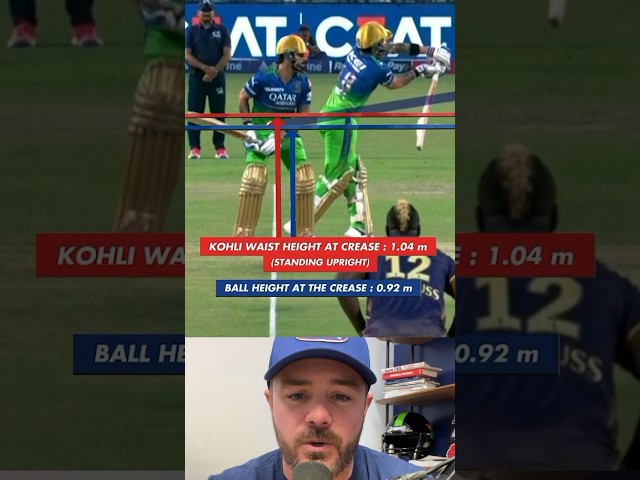
In a cricket match, the bowler delivers a ball that appears to pass above the batter's waist as he takes his stance at the crease. Coley, the batter, immediately signals to the umpire that the delivery was high, indicating it was above his waistline. The umpire, however, disagrees and rules Coley out, stating the ball was actually below his waist. Coley respectfully expresses his disagreement with the umpire's decision, explaining to his teammates that he believes the ball was way above his waist. The umpire stands by the call, explaining that they measured Coley's waist prior to the delivery and determined the ball crossed the crease below that point. The discussion highlights the importance of the precise positioning of the ball relative to the batter's waist in cricket. Coley argues that if a bowler were to deliver the ball with a high, lollipop-like trajectory, the umpire may not necessarily call it out, even if it appears to be above the batter's waist from the player's perspective. The incident showcases the nuanced nature of cricket rules and the need for umpires to make careful, measured assessments in real-time. Coley departs the field, acknowledging the umpire's decision, but still expressing his respectful disagreement with the call. The exchange provides insight into the challenges faced by both players and officials in interpreting the rules and ensuring fair play on the cricket pitch. The discussion surrounding the height of the delivery and its relation to the batter's waist highlights the importance of clear communication and a shared understanding of the game's regulations. As the match continues, the teams and spectators will undoubtedly continue to analyze and debate the merits of the umpire's decision, underscoring the ongoing dialogue that helps shape the sport and its officiating.